IVR monitoring: an online insurer checks its information system through its IVR
10 minbetween two test calls
≈ 13,600test calls over three months
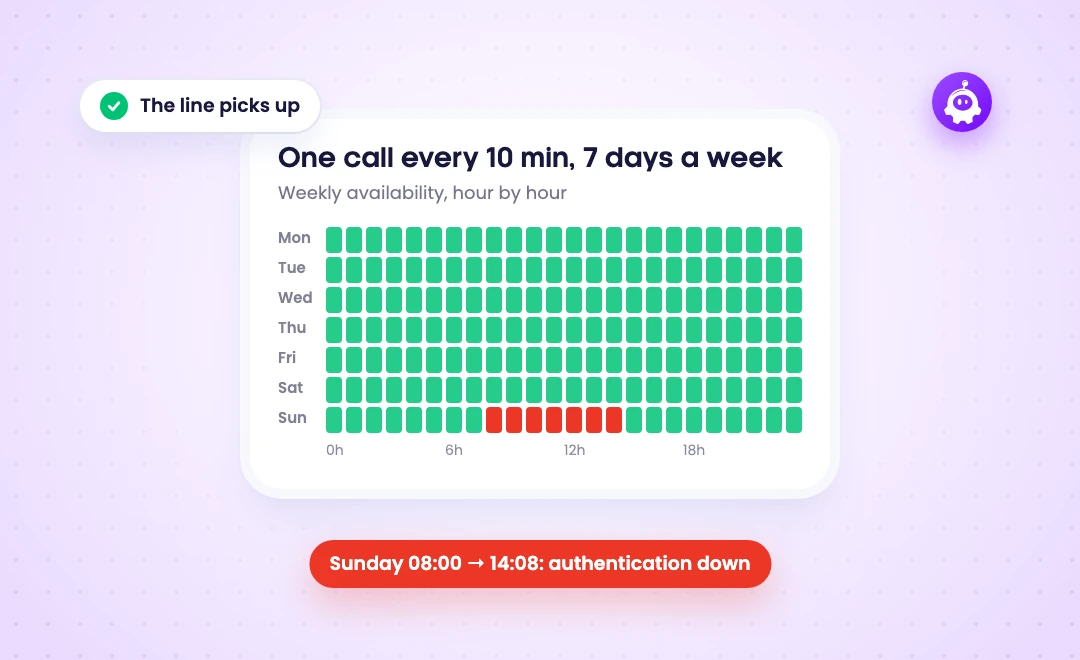
98.75%availability over one quarter
6 hof outage on a Sunday
ABOUT US
This online insurer has been a 2Be-FFICIENT client for several years. For this client, the phone remains a critical channel: it takes over when digital services are down.
When digital services are down, the phone takes over. Yet an IVR that answers does not prove that the services behind it are working. Night and weekend outages are the ones nobody sees. The challenge: knowing that a business service is down, even when the line answers.
Solution implementation
A single call journey runs every 10 minutes, and has done so for several years. It is enough to get started, and it already checks several building blocks of the information system. Around 13,600 test calls over the last three months.
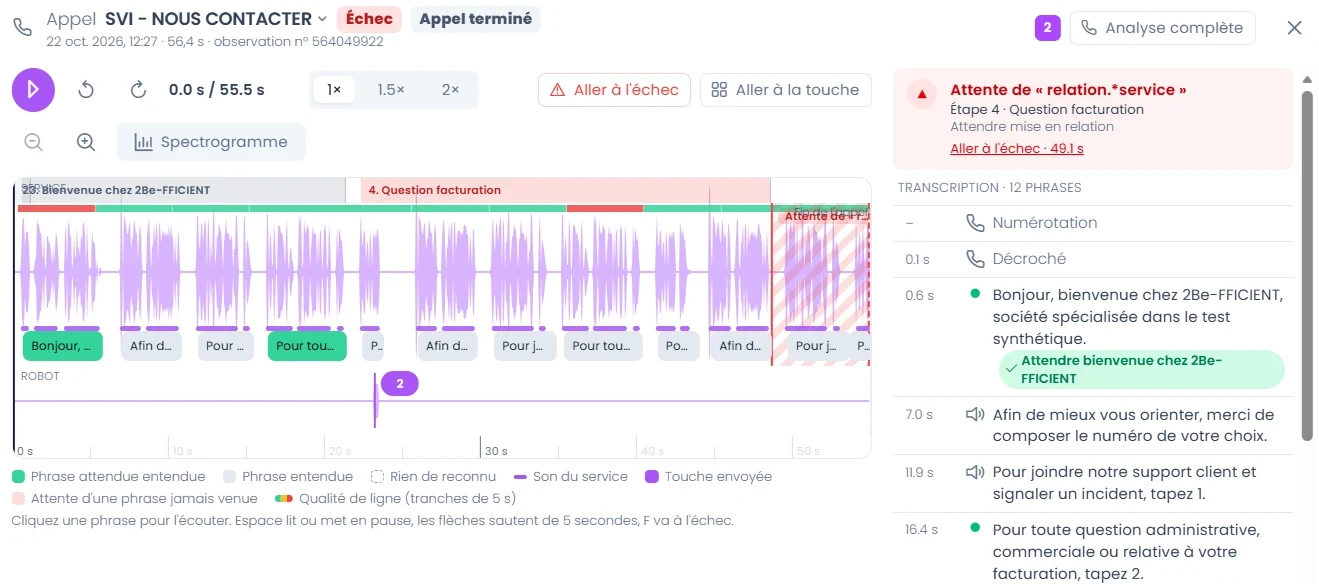
Example of a call analysis screen: the failing step is located in the transcript
Functional coverage
The call to the customer number and the pickup
The response of the caller authentication service
The response of the IVR dialogue engine
Here the IVR acts as an end-to-end probe: if authentication goes down, the phone shows it, even if the line answers.
Results (over one quarter)
Availability of 98.75%, compared with 98.57% the previous quarter.
One Sunday, the number is unreachable from 8:00 a.m. to 2:08 p.m.: six hours of outage at the weekend, when few teams are around to notice it.
One failure in two comes from the authentication service, not from the line: without this check, these outages would have passed for an IVR “that answers”.
A single scenario is enough to get started, and it already checks several building blocks of the information system. The IVR complements web and mobile monitoring: it gives an omnichannel view of the customer journey. Night and weekend outages, which nobody sees, are dated and measured by continuous testing.