Opale, the AI that qualifies your alerts and speeds up diagnosis

An alert fires: real incident or false positive? Opale automatically analyses every detected failure, assigns it a reliability index and turns the raw alert into a qualified, immediately actionable signal.

hello bank
maif
leboncoin
société générale
gmf
engie
bnp paribas
matmut
decathlon
lcl
direct assurance
galeries lafayette
Observation

From raw alert to qualified signal

An alert with no context raises a question: real incident or false positive? Answering by hand (opening the video, reading the logs, comparing to a successful run) takes time and technical expertise. That's where Opale steps in.

blue glow monitoring
purple glow monitoring
Unseen drift
Threshold crossed
False positive
Solution

Opale: automatic diagnosis on every incident

As soon as a scenario detects an anomaly, Opale analyses the incident in seconds and delivers a diagnosis readable by IT and business alike. Included in every 2Be-FFICIENT service, with no configuration.

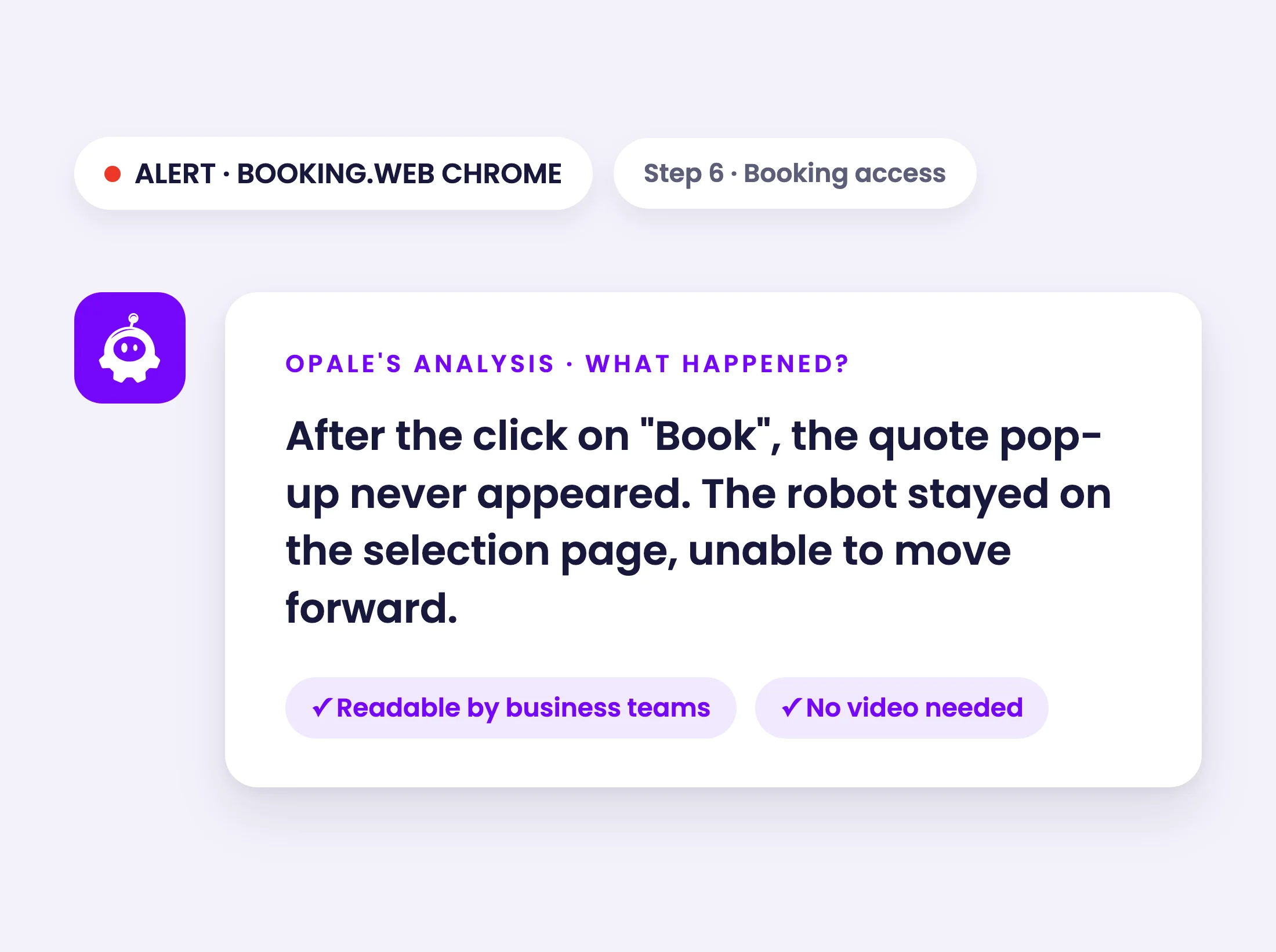
Opale's analysis: a plain-language description of the detected failure

A human-readable failure description

Opale rephrases the incident in plain language: what the robot did, where it stopped, what was missing on screen. Readable without knowing the monitoring script.

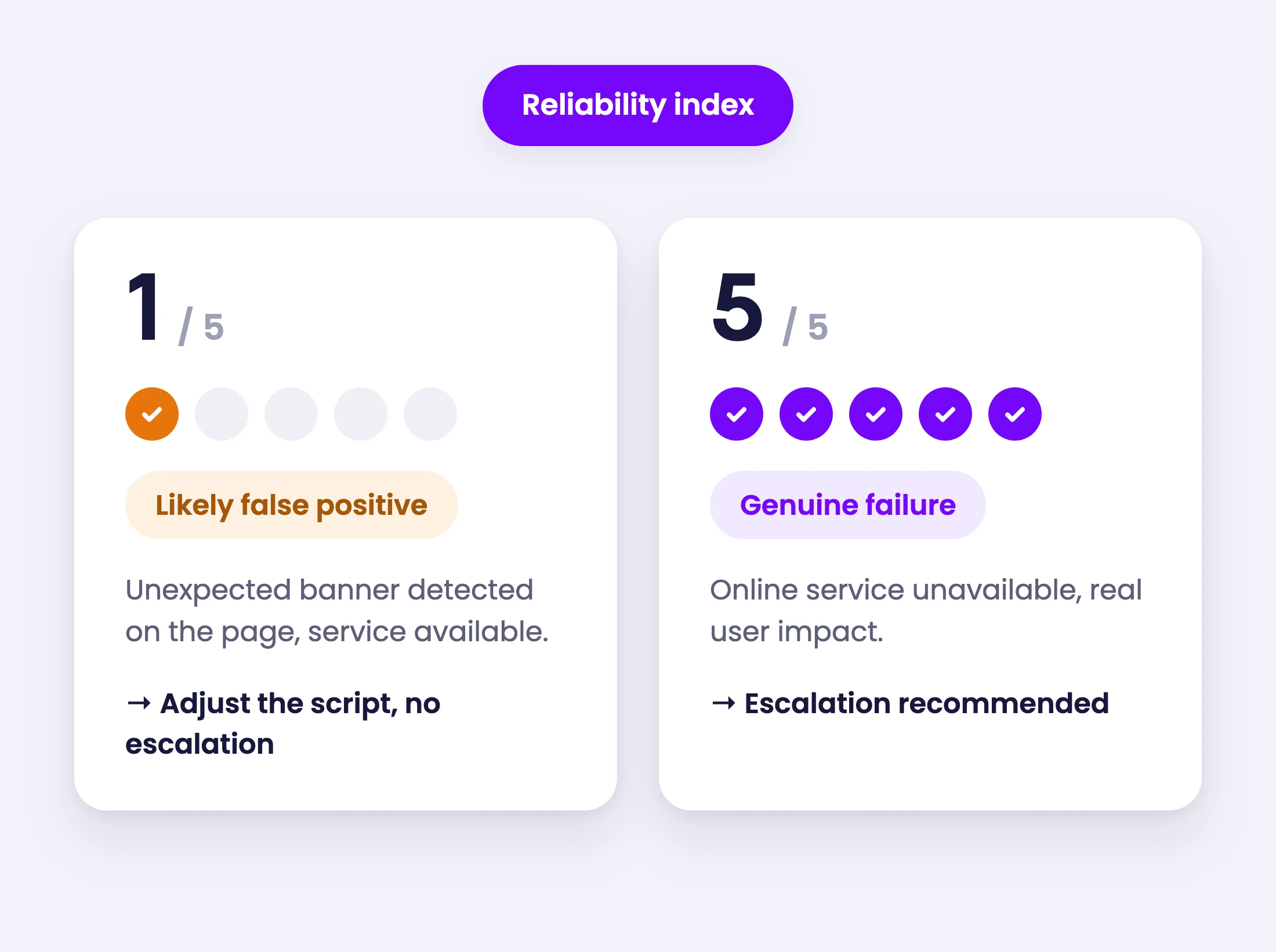
Opale reliability index: 1 out of 5 likely false positive, 5 out of 5 genuine failure

A reliability index from 0 to 5

This is Opale's central feature: every incident gets a score that qualifies how likely it is to be real. Low score (0-1): probable false positive. High score (4-5): incident to escalate.

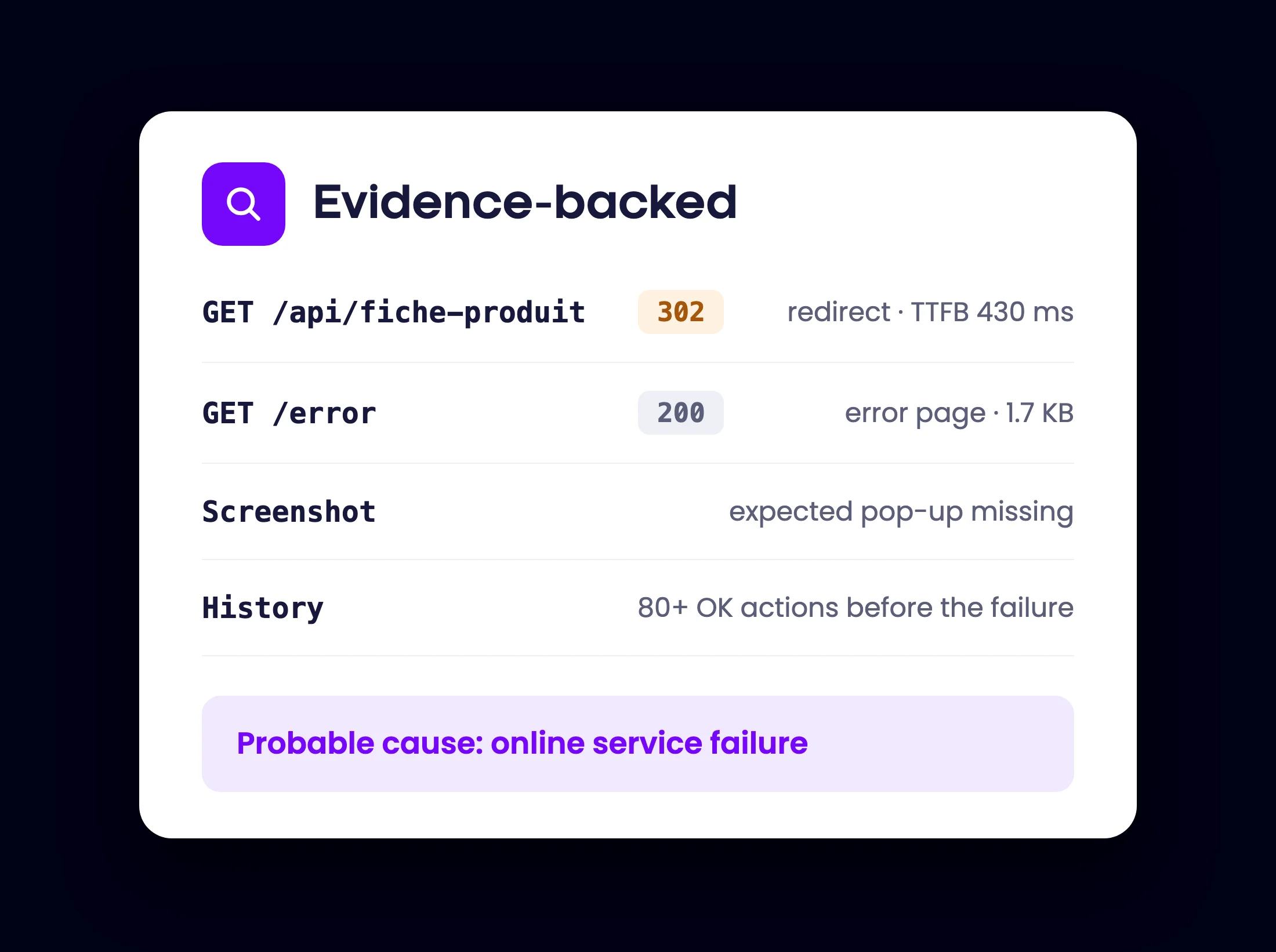
Opale technical justification: HTTP codes, screenshot and history as evidence

A technical justification, backed by evidence

Beyond the score, Opale explains its conclusion: detected HTTP codes, network anomalies, unusual behaviours and a probable-cause hypothesis. IT gets a lead before even opening a diagnostic tool.

What our clients say

Opale builds on the same supervision technology our clients rely on every day, across banking, insurance and e-commerce.

Features

Four capabilities, one embedded AI

Opale combines four complementary capabilities, natively included in every 2Be-FFICIENT service.

01 Automatic analysis of every incident

As soon as a scenario detects an anomaly, Opale gathers screenshots, logs and network requests, compares them with successful runs and qualifies the incident automatically, in seconds.

Context capture

Opale gathers screenshots, logs and network requests.

Comparison with OK runs

Opale compares the run with recent successful observations.

Reliability index

Opale assigns the incident a score from 0 to 5.

Description & justification

Opale describes the failure and backs its conclusion with evidence.

Qualified diagnosis

You get an actionable signal; the decision stays human.

floating 2be

02 The right alert, at the right time

Opale tells the critical alert from the false positive and qualifies the signal before it's passed on, across all your channels.

Email

SMS

Push notifications

Voice alerts

Email

SMS

Slack

Signal

Discord

Microsoft Teams

Slack

Signal

Discord

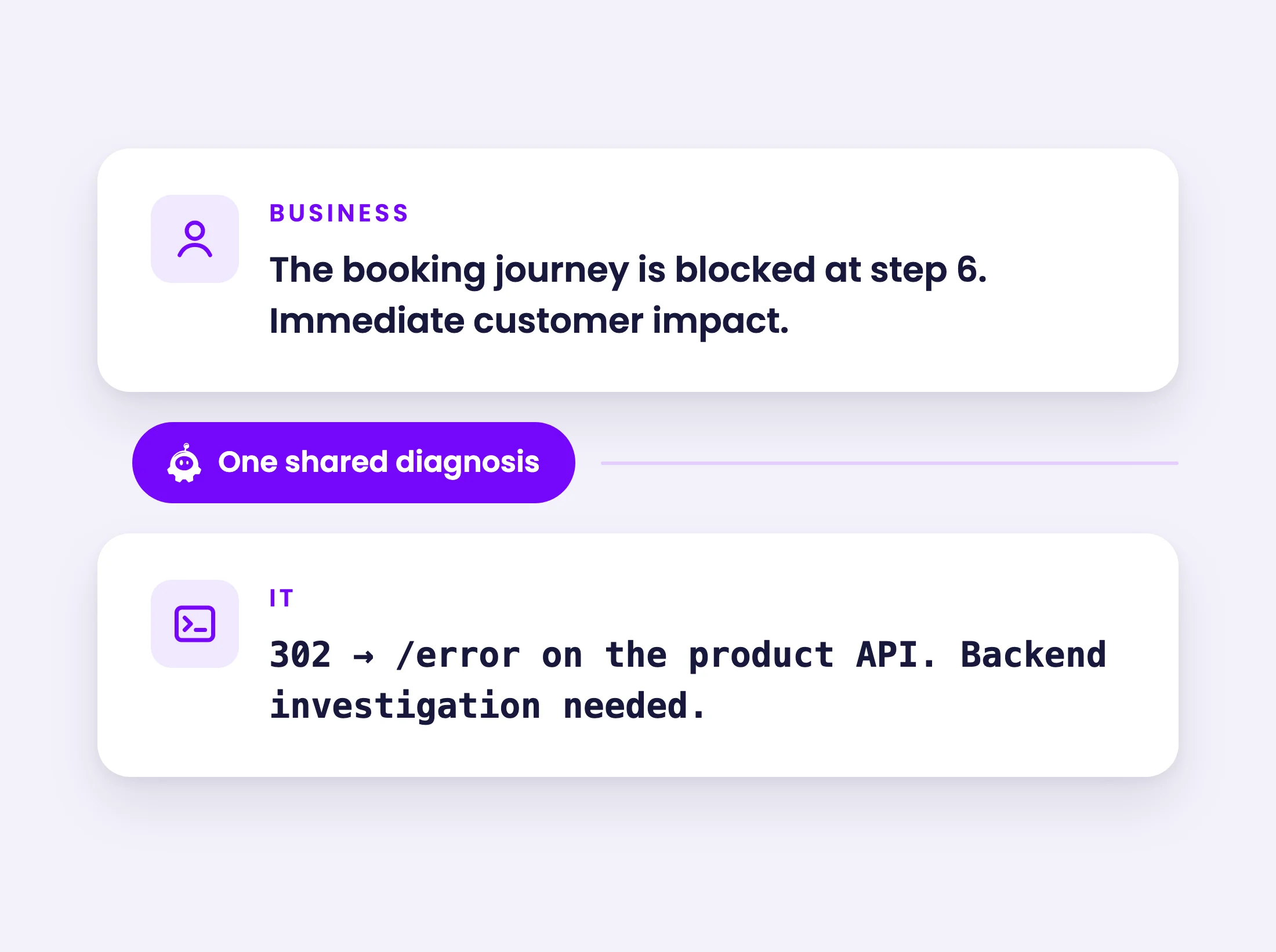
03 A shared language between IT and business

The human description speaks to the business, the technical justification to IT, the reliability index to both. The result: less back-and-forth, faster decisions, the right people from the first message.

The same Opale diagnosis read by business and IT

04 Automatic categorisation

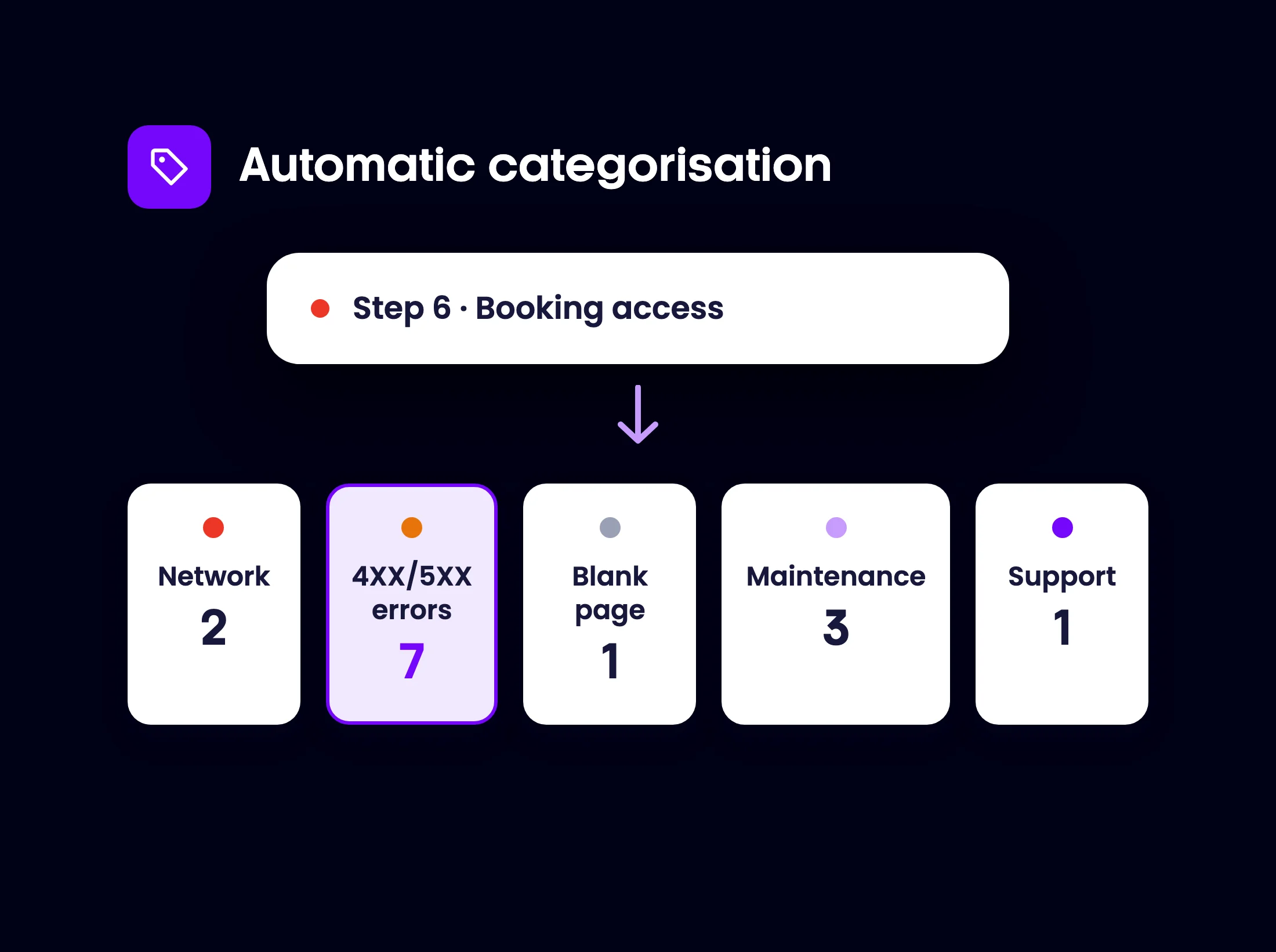
Opale classifies every incident: network, 4XX/5XX, blank page, maintenance, support intervention. Enough to route resolution to the right people and run cross-cutting analyses on recurring issues.

Automatic categorisation of an incident into the 4XX/5XX errors family
The full cycle

How does it work?

From the detected anomaly to the qualified diagnosis: what Opale produces, automatically, on every incident.

Incident detected

A monitoring scenario fails.

Context capture

Opale gathers screenshots, logs and network requests.

Comparison

Opale compares the run with recent successful observations.

Reliability index

Opale assigns the incident a score from 0 to 5.

Description & justification

Opale describes the failure in plain language and backs its conclusion.

Accelerated diagnosis

You receive a qualified diagnosis, ready to act on.

Clients

Approved and used by the largest companies

Opale builds on 25 years of monitoring expertise and is included in every 2Be-FFICIENT service.

bnb paribas logo
gmf logo
mma logo
maaf logo
logo direct assurances
logo matmut
logo maif
logo leboncoin
logo societe generale
logo yves rocher
logo hello bank
logo ikks
logo engie
logo easyvoyage
logo air corsica

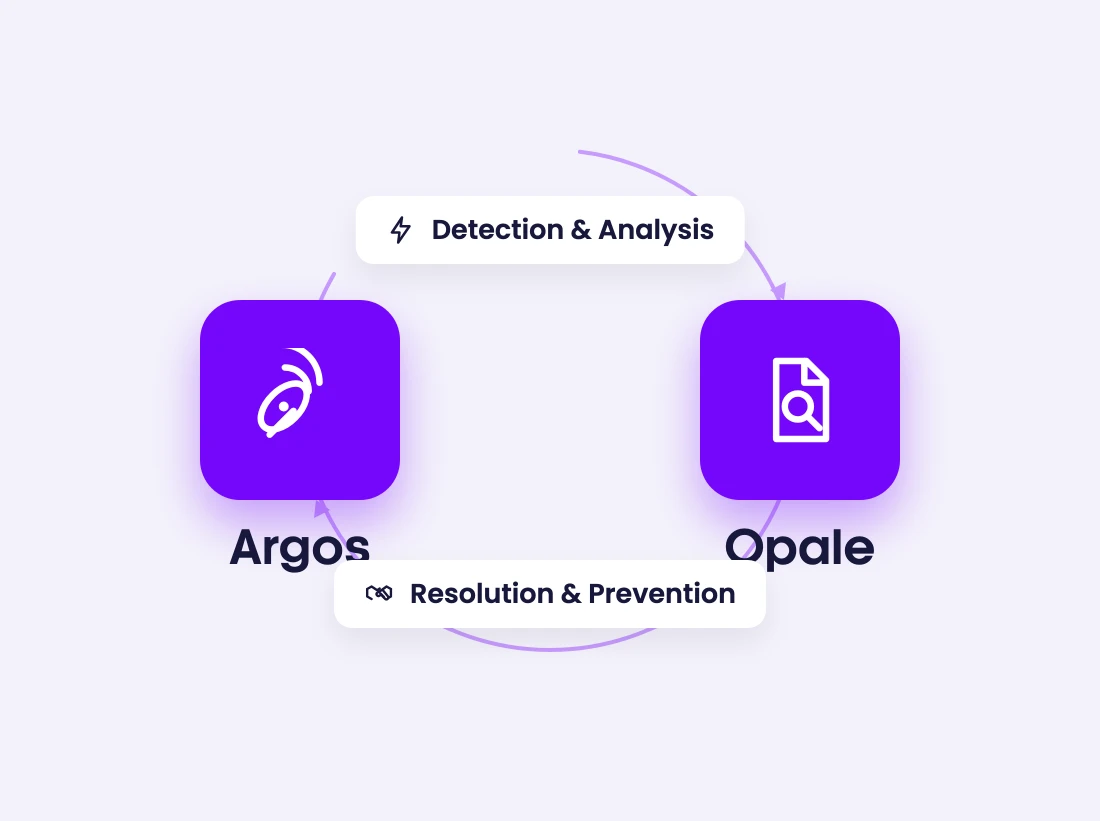
Argos predicts, Opale analyses: the duo that covers the entire incident lifecycle

Opale is included in every 2Be-FFICIENT service, with no configuration. Contact us for a demo in real conditions.

F.A.Q.

Opale: frequently asked questions

Opale is the AI module embedded in 2Be-FFICIENT that automatically analyses every detected incident. It turns a raw alert into a qualified signal: a human-readable description of the failure, a reliability index from 0 to 5, a technical justification and a categorisation. All in seconds, the moment the alert is generated.

The index runs from 0 to 5. A low score (0-1) points to a probable false positive: a content change on the site, an A/B test, an unexpected popup, a timing issue. A high score (4-5) points to a probably real failure that warrants investigation. Mid scores (2-3) call for a human eye to decide.

Opale cross-references several sources available at the moment of the incident: the screenshots of each step of the journey, the network data (HTTP codes, errors, timeouts), the browser logs, and the comparison with recent successful runs of the same scenario. It's this triangulation that produces a justified reliability index.

No. Opale speeds up and guides diagnosis, it doesn't replace it. The final decision (neutralise the alert, adjust the script or escalate on the client side) always stays human. Opale provides justified hypotheses and a reliability index, not certainties.

Yes. Opale analyses incidents detected on every type of journey monitored by 2Be-FFICIENT: websites, mobile apps, APIs, IVR. It's accessible from the failure-diagnosis page and from the sent-alerts view.

Not today. Opale is a diagnosis and triage module: it produces probable-cause hypotheses and recommendations, but does not trigger automatic corrective actions.

No. Opale is included in every 2Be-FFICIENT service: nothing to configure, nothing to activate separately. As soon as a scenario detects an anomaly, Opale analyses the incident and enriches the diagnosis available in the console and in the alerts sent (email, SMS, Slack…).

Argos and Opale cover the entire lifecycle of an incident. Argos works upstream: it detects gradual drifts and predicts the incident before it strikes. Opale takes over once the alert fires: it qualifies the incident, analyses it and accelerates diagnosis. Prediction on one side, analysis on the other.

Your alerts deserve a qualified diagnosis

Opale analyses every incident, qualifies false positives and accelerates your diagnosis. Included in every 2Be-FFICIENT service: request a demo to see it in real conditions.

FR EN