The 2Be automaton now validates the meaning of your AI agents' responses semantically, without relying on exact keyword patterns. You monitor journeys that embed generative AI, across web, mobile and IVR, with the same rigour as your classic scenarios.
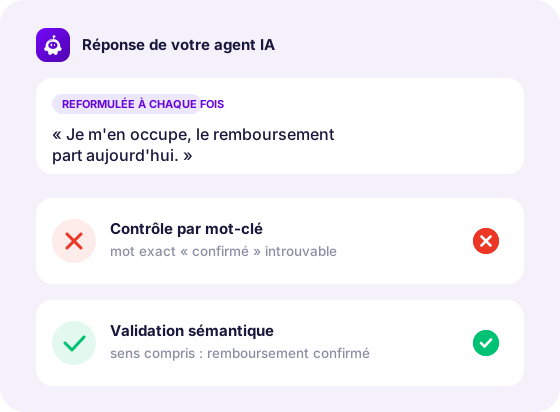
A classic scenario checks for the presence of exact words in the response. But a generative AI rewords, varies and personalises: the same meaning takes a thousand forms. Keyword-pattern checks then multiply false positives and let real errors through.
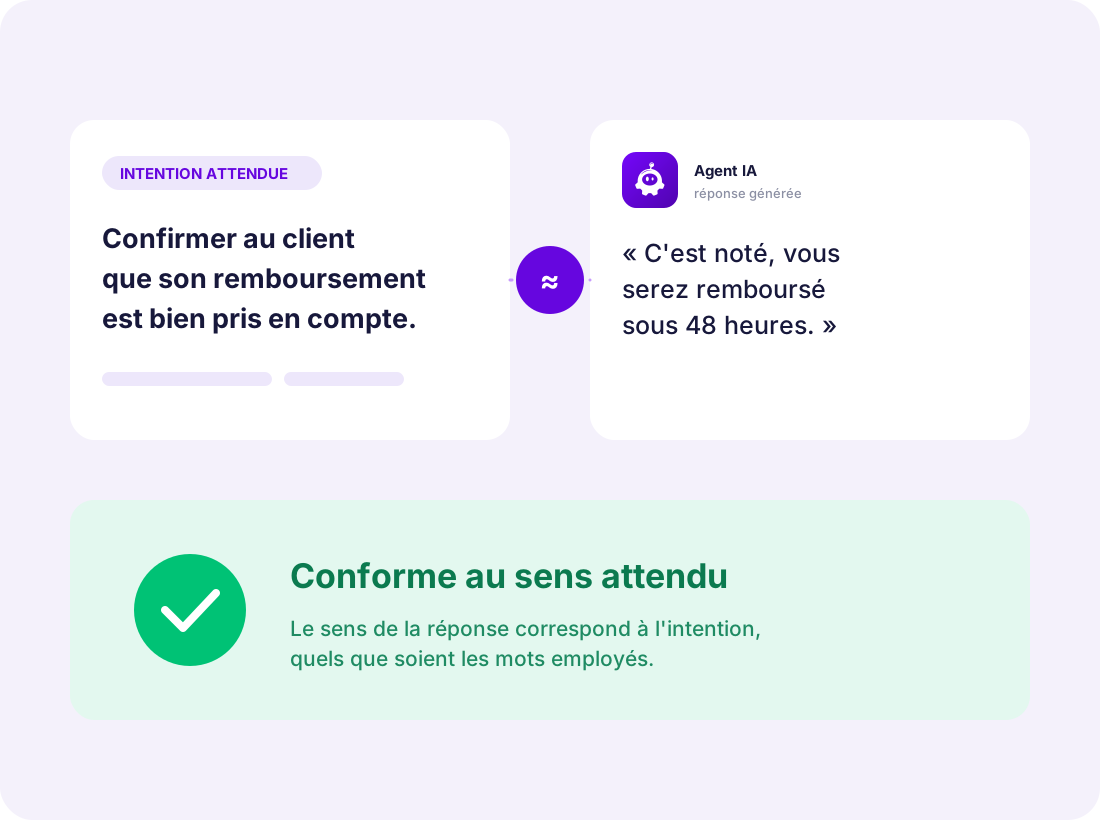
Rather than looking for exact words, the 2Be automaton compares the meaning of your agent's response to the expected intent. The check stays reliable even when the wording changes, and flags what truly deviates.
The automaton assesses whether the response really means what it should, from its meaning and not from fixed keywords. You describe the expected intent; it checks that the intent is met.
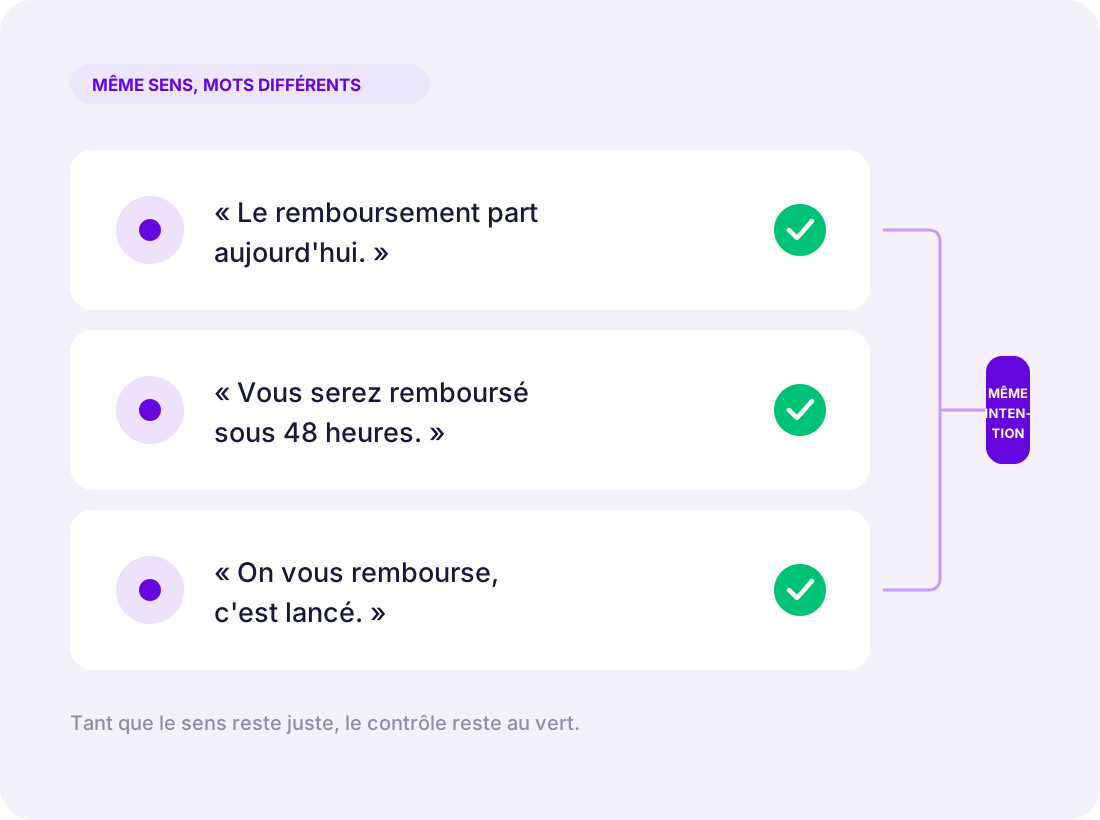
A generative AI never answers in exactly the same way twice. Semantic validation absorbs these variations: as long as the meaning is right, the check stays green.
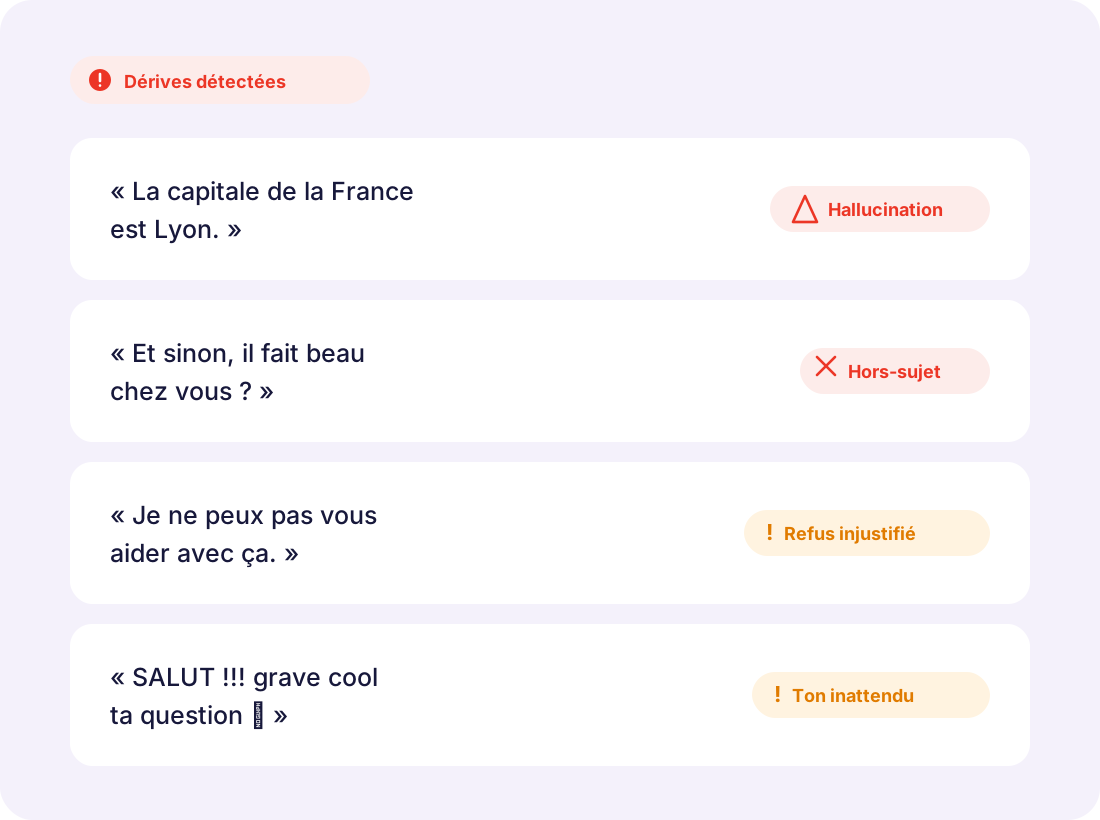
When the response drifts from the expected meaning, the automaton sees it: hallucination, off-topic, unjustified refusal, change of tone. You are alerted before your users ever experience it.
Our resources on monitoring, AI and the quality of your journeys.
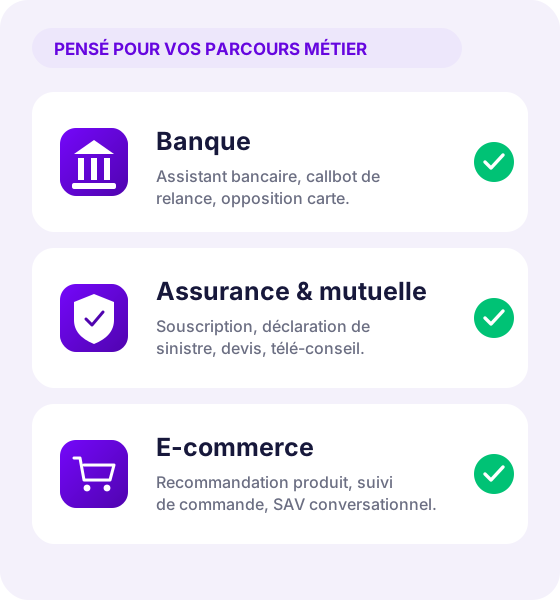
Our clients already monitor their critical journeys with 2Be-FFICIENT, across banking, insurance, mutual insurers and e-commerce.
Four capabilities to monitor your journeys that embed generative AI, across web, mobile and IVR.
Our microbots replay your journeys continuously, capture your AI agents' responses and validate their meaning, without relying on keywords.
Response capture
The microbot replays the journey and captures the AI agent's response.
Semantic analysis
It analyses the meaning of the response, regardless of its wording.
Comparison to intent
It compares the meaning obtained to the expected intent you described.
Semantic verdict
Compliant or not: the check turns green or raises an alert.
Qualified alert
On a deviation, the alert goes out on your channels with context.
2Be-FFICIENT tells a real alert from a false positive and qualifies the signal before passing it on, on the channel of your choice.
SMS
Push notifications
Voice alerts
SMS
Slack
Signal
Discord
Microsoft Teams
Slack
Signal
Discord
Web chatbots and copilots, in-app mobile assistants, callbots and voice servers (IVR): one validation engine covers every channel, with no change to your AI agents.
Banking, insurance, mutual insurers, e-commerce: we monitor journeys that embed an AI agent, from the conversational assistant to the follow-up callbot, with the same rigour as your critical scenarios.
From the replayed journey to the qualified alert: a continuous cycle that validates the meaning of every AI response.
You describe the journey and the agent's expected intent.
The microbot replays the journey on web, mobile or IVR.
The automaton compares the meaning of the response to the expected intent.
The response is judged compliant or not, without relying on keywords.
On a deviation, the alert goes out with screenshots and context.
You spot the drift and fix it before any client impact.
We build on 25 years of expertise monitoring critical journeys, across banking, insurance, mutual insurers and e-commerce.
Already running 2Be-FFICIENT scenarios? Let's talk: we add semantic validation of your AI agents to your existing supervision.
We compare the meaning of the response to the intent you describe, not exact words. The automaton judges whether the response truly says what it should. Where a keyword-pattern check fails as soon as the agent rewords, semantic validation stays reliable, because it reasons about meaning rather than phrasing.
Nothing breaks. Semantic validation is built to absorb synonyms, paraphrases and style variations. As long as the meaning stays right, the check stays green. It only fires on a genuine shift in meaning, which sharply reduces the false positives typical of non-deterministic responses.
On the web (chatbots, on-site or web-app copilots), on mobile (in-app assistants) and on IVR (callbots and voice servers). The same validation engine applies to every channel, with the same rigour as your classic scenarios, in a journey replayed end to end.
Yes. When the response drifts from the expected meaning, whether a hallucination, an off-topic answer, an unjustified refusal or a change of tone, the automaton flags it. You are alerted to these drifts before your users ever run into them.
No. We replay your journeys as a user would and validate the responses produced. No integration or change to your AI agents is required to get started: you simply describe the journey and the expected intent.
The principle stays the same: replay a journey and check the result. What is new is that the check looks at the meaning of the response, not the presence of exact words. That is what makes it fit the non-deterministic responses of generative AI, without giving up the rigour of your classic scenarios.
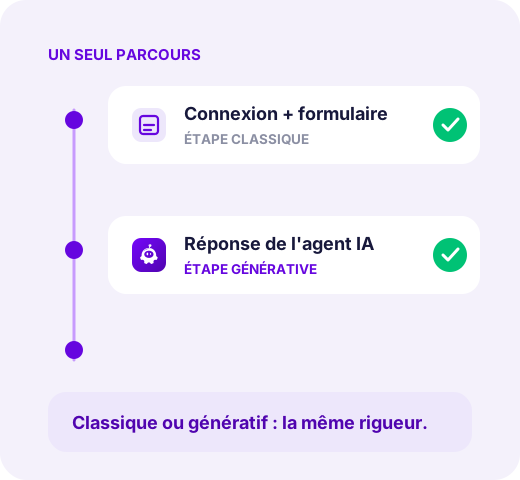
Yes. A single scenario can chain classic steps (login, navigation, form, payment) and conversational steps with an AI agent. Each kind of step is validated with the right method, within one and the same journey monitored end to end.
Just like your other scenarios: the alert goes out on the channel of your choice (email, SMS, notification, voice) with the screenshots and context of the deviation. The signal is qualified before reaching you, to avoid false positives and save you diagnosis time.


The 2Be automaton validates the meaning of your AI agents' responses, across web, mobile and IVR. Book a demo and see semantic validation at work on your own journeys.
This site only uses cookies that are strictly necessary for it to work.
Book a session with our team: a 30-minute personalised demo to see how 2Be-FFICIENT addresses your monitoring challenges.
Our team will get back to you within one business day to agree on a time together.